


Hong Kong Paid Ambulance Insurance Myth – Did You Know Insurance Actually Covers It?
- ambermedicalpr
- Mar 2
- 3 min read
Updated: Mar 5

In Hong Kong, when it comes to "ambulances," the average citizen's first reaction is "dial 999, it's free." The emergency ambulance service provided by the government's Fire Services Department is indeed a crucial line of defense in the public healthcare system. However, as medical needs diversify, more and more citizens are opting for fee-based private ambulances for many situations such as inter-hospital medical transfers, discharge transport, cross-border medical trips, or specialized medical transport. This not only alleviates the pressure on the public healthcare system but also provides more efficient and considerate service.
However, many people still have a question: If I spend over a thousand dollars to call a private ambulance, will my insurance cover it?
In fact, this is a common misconception about medical insurance. In this article, we will debunk this myth. The truth is, whether in international or Hong Kong insurance policies, ambulance fees have always been a basic coverage item.
Normal International Practice: Ambulance Fees are Reimbursable Medical Costs

Overseas, in places like the United States, Canada, Australia, and even mainland China, ambulance services are not entirely free. For example, in the US, a single ambulance ride can cost anywhere from hundreds to thousands of US dollars, and these costs are typically covered by insurance companies. Local medical insurance, auto insurance (for accident victims), and travel insurance commonly list "ambulance transport" as a standard covered benefit.
The logic behind this is very clear: The ambulance transporting the patient to a medical institution for treatment is part of the medical process, not general transportation cost. Therefore, in mature insurance markets, when most policies cover accident or medical expenses, ambulance fees are included.
Deciphering Policy Wording: "Ambulance Fees" within Miscellaneous Expenses
Many insurance users, when reviewing their policies, tend to focus only on high-claim items like "hospital room" or "surgery fees," overlooking the details within "Miscellaneous Expenses." In reality, in all medical insurance contracts, ambulance fees have always been categorized under miscellaneous expenses.
For instance, a term in a certain medical insurance plan clearly states as the first item:
Miscellaneous Expenses:
i) Ambulance service to and from the hospital
Other miscellaneous expenses include prescribed medication, in-hospital diagnostic test fees, etc.
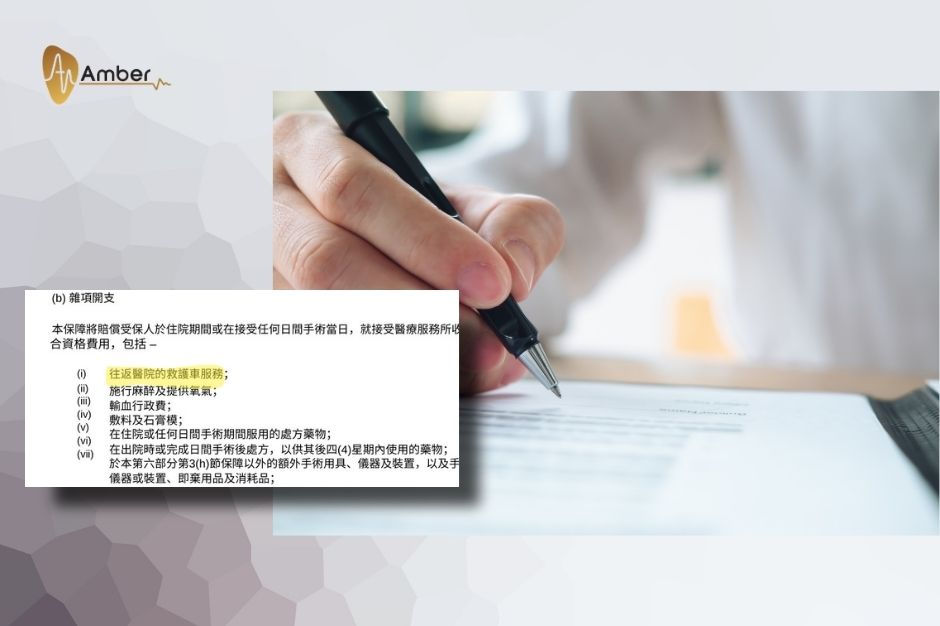
From this, it's clear that in insurance practice, land ambulance transport fees fall under the first category of "Miscellaneous Expenses." This is not a special clause but a standard feature in many personal accident, medical, and travel insurance plans. It's just been less discussed publicly in Hong Kong because emergency ambulances have traditionally been free.
The Development Trend of Paid Ambulances
Although private ambulance services in Hong Kong are still in a developmental stage, with the aging population, increasing demand for cross-border medical services, and citizens' growing need for high-spec non-emergency medical transport, paid ambulances are gradually becoming an indispensable part of the system.
For the average citizen, understanding how insurance covers these services is crucial. It allows for peace of mind when using private ambulances and helps avoid unnecessary financial burdens.
Making Good Use of Insurance to Reduce Medical Costs
The true value of medical insurance lies not only in covering major expenses like hospitalization and surgery but also in the finer details of coverage – such as ambulance fees. By gaining a deeper understanding of your policy terms, you can utilize your insurance more effectively, whether facing emergency medical needs or planning for cross-border medical care, thereby reducing financial stress.
As Hong Kong's healthcare system gradually evolves towards public-private partnership and cross-border medical services, clearly understanding ambulance fee reimbursement will help private fee-based ambulances connect public and private services, reduce pressure on public healthcare, and foster the development of diversified insurance products.
There are many different types of insurance products. If you have any questions about policy claims, it is advisable to consult your insurance agent.

Comments